

‘When is the best time to do a vaginal microbiome test to find out what is causing my vagina, vulva or bladder symptoms?’
This is a question I get asked a lot in my clinic. I frequently use functional tests with my clients because many people who come to me have already seen several other practitioners, be they doctors or other holistic practitioners and these people are at the end of the line and want answers. By using functional testing we can get those answers, or at least a direction to those answers, without wasting any more time (disclaimer I do not diagnose).
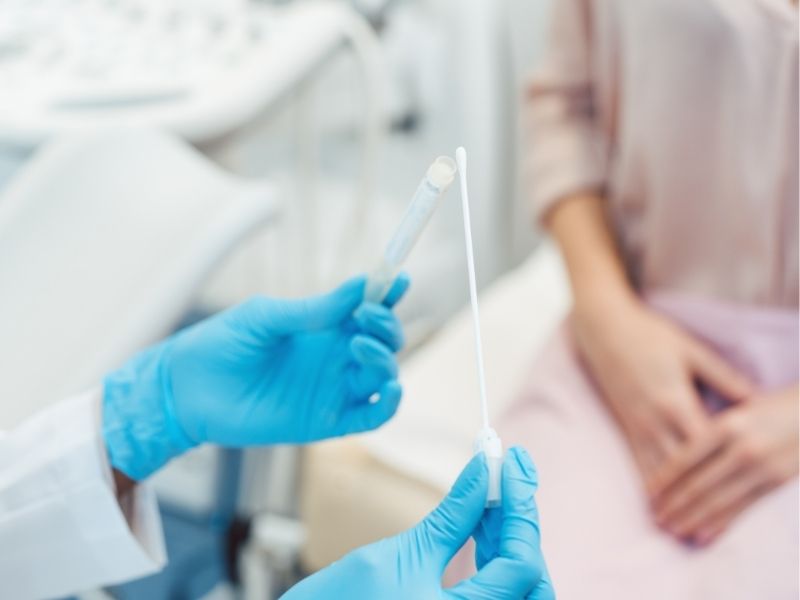
When is the best time to test?
From a test that will look at the DNA of your microbiome, to getting a swab with your gynaecologist, when is the best time to test?
- On a day when you have symptoms
- Not when you are menstruating
- For fertility with no symptoms, around ovulation or mid cycle

You need to have symptoms on the day of testing
- You need to have symptoms on the day of testing.
This is so important, if you are not having symptoms or your symptoms have died down, then those pesky microbes (that may or may not be causing your issue) may not be at a decent enough level to show up on the results.
So, track your symptoms, do you always get symptoms just after your bleed for a few days, or is it more in the middle of your cycle, or is it that last week before menstruation? Work that out and then make sure that you have, preferably, the worst level of symptoms for when you test.

You cannot test when you are menstruating
- You cannot test when you are menstruating, even spotting. If this is when you get your worst symptoms, we would need to discuss this (there are tests for menstrual blood).

Testing for fertility reasons?
- If you are looking into your vaginal health for fertility reasons you want to think about doing the test around your ovulation or around the mid cycle point. But not everyone ovulates on day 13/14. A good and cheap way to test this is with luteinising hormone pee sticks, you don’t need a fancy device just pee on a stick every day once you have stopped menstruating and check for the double line to appear then test to show that your luteinising hormone has been released and there for you most probably are ovulating. Do your microbiome test then.
Why might you want to consider testing your vaginal microbiome?

- Do you have any vaginal or vulva symptoms like unusual discharge, odour that you feel is not your normal; irritation, inflammation or swelling, pain or lesions?
- Do you have a history of or are suffering from any kind of bladder condition or UTI?
- Are you heading into menopause and want to check that all is well and healthy down, there? Once our oestrogen drops it is harder to keep our vaginal microbiome balanced, but not impossible.
- Do you have any fertility and conception issues or do you want to optimise your vaginal health (preferably before conception but post conception is also fine)?
- If you have had a diagnosis of HPV (Human papillomavirus), CIN (Cervical intra-epithelial neoplasia), or HSV (Herpes simplex virus).
What information are we hoping to gain from doing one of these tests?
Culture based testing, although still useful, is limited by what they can actually grow in a petri dish, which unfortunately is not everything that we want to see. By looking at these new DNA tests we can see a deeper picture of what is going on with your microbiome on that day of testing. This test along with a carefully taken case history can help us to uncover whether there are microbes there associated with bacterial vaginosis, candida (thrush), atrophic vaginitis, Desquamative inflammatory vaginitis (DIV), cytolytic vaginosis, mollicutes, and what your lovely lactobacilli microbes are doing.

What if you can’t afford to test?
If you can’t afford to test there are still ways of getting some clues about what is going on from your symptoms. Start tracking your symptoms over the month and doing a simple pH check of the vagina every 3 days over the month. This will help to show patterns that may help to uncover what might be causing your symptoms. Getting swabs done by your gynaecologist or at an STD clinic can be useful, make sure to get a print out of the findings. Being told you have good or bad bacteria, as often happens, doesn’t really help us, we need to see the correct terminology of the findings.
This blog is written for information purposes only
Do you want to check your vaginal microbiome and uncover what is causing your symptoms?
To start your journey, send me a DM on Instagram or Facebook
or email me at nutrition@katewaters.co.uk