

What is an ‘anti-inflammatory diet’?
The idea is based around the traditional Mediterranean diet and its antioxidant compounds. The point of it is quite simply to reduce inflammation in the body.
Unfortunately the typical diet in the Mediterranean now, is no longer what it used to be. Fewer and fewer people are cooking at home with the increase of cheap fast food now available across Europe (and the rest of the world).
We need to think back to the diet from a good 80 years ago or more, as this is where the research has been generated from to suggest this diet might be beneficial for our health.
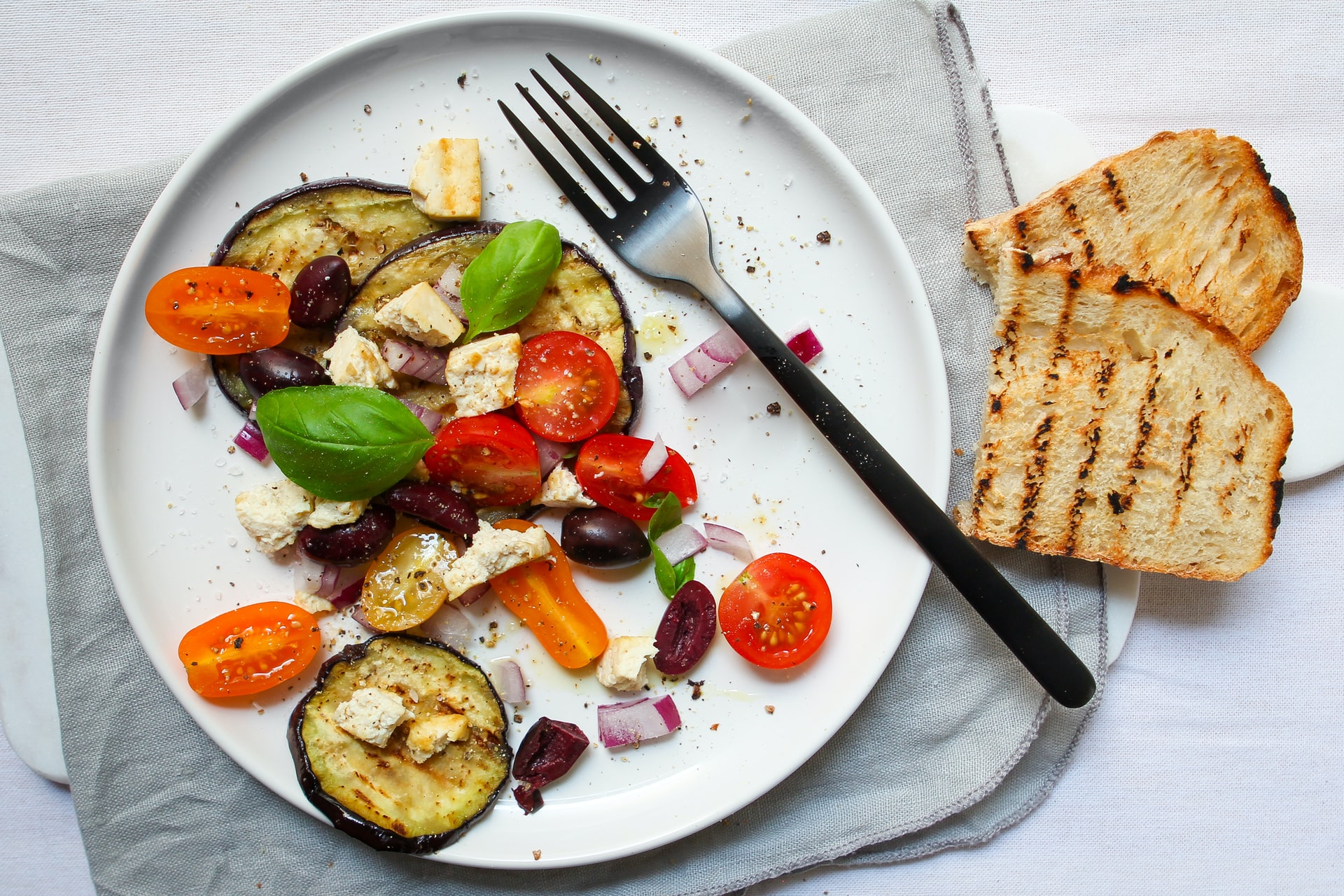
What is the Mediterranean diet?
Here are the simple basics of the diet:
What to eat on the Mediterranean Diet
- Mostly plant based meals, which are fresh and homemade, with some meat and/or fish sometimes
- Large amounts of vegetables with some fruits
- Foods containing omega 3 fatty acids
- Whole grains
- Herbs and spices
- Fermented foods
What to reduce eating on the Mediterranean Diet
- Red meat
- Sugar
- Alcohol (in moderate amounts is fine in most people)
What not to eat on the Mediterranean Diet
- Processed foods and fast food
- Refined CHO and sweetened drinks
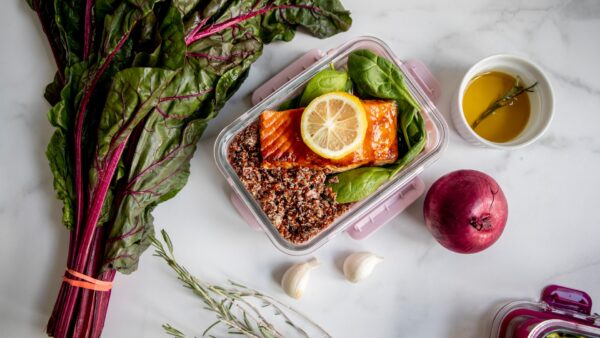
Let’s go into this in some more detail:
Protein and mostly plant based
Protein is made up of amino acids, they are the building blocks of life. Every living thing has some amino acids in it, even broccoli. There are 20 amino acids; 9 are essential and 11 are not essential meaning our body can make them itself.
To be a complete protein the food must have all 9 of the essential amino acids we cannot make ourselves.
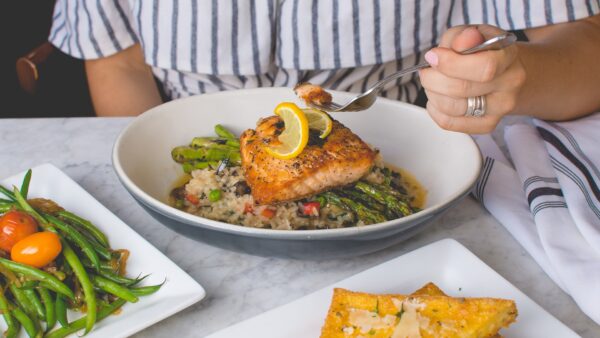
Complete proteins consist of:
- Meat, fish, eggs and dairy
- Quinoa, amaranth, chia seeds, buckwheat, hemp and soy products
Lentils, pulses, legumes, brown rice, flax seeds, and other nuts and seeds are almost complete proteins. You can combine non-complete proteins together to make a complete protein intake.
They do not have to all be at the same meal, just over the course of a day’s eating. This is why we do not need to eat animal products at every single meal whilst still able to ensure our protein needs.

Examples of Complementary Proteins
It is important to look at what amino acid is missing to work out paring, but some classic examples would be:
- Rice and beans
- Hummus and pita bread
- Beans with nuts or seeds
- Or add in a complete protein like quinoa or eggs.
Another reason for eating more pulses and lentils is their fibre content. This feeds our gut microbiome, this supports our immune system, improves gut motility, plus all the vitamins and minerals they provide.
Meat, fish and diary are all great sources of protein,
but we do not need to eat them every day.
Constant consumption of meat, especially red meat can be inflammatory. Sourcing organic or well raised animal products is essential not only to know that the animal has led a healthy and happy life but also this ensures that the product is better for us too! If possible buy from a butcher who locally sources, rather than a supermarket
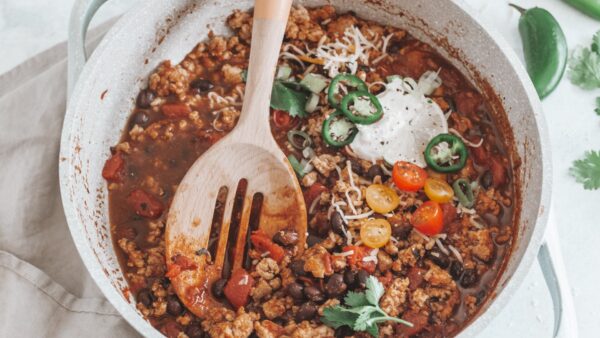
Umami
Umani translates as ‘yumminess’ and is found in things like meat, parmesan, asparagus, mushrooms, soy sauce, sundried tomatoes, nutritional yeast flakes etc. It is why Japanese scientists created MSG so that umami could easily be added to food like salt, but this is easy to do with natural foods; I use powdered mushrooms, nutritional yeast flakes, mustard, soy sauce and powdered seaweed to add depth of flavour/umami to dishes.
A note on soy products:
Soy is a massively over-produced crop that is now processed in a very different way than it was originally in South East Asia. Fermentation of this bean makes it much more digestible. The by-products of tofu e.g., soy milk, was not consumed in large amounts. If consuming a soy product regularly, fermented is fine e.g., tempeh, miso or soy sauce but otherwise always go for organic and limit things like tofu to 2 x week.
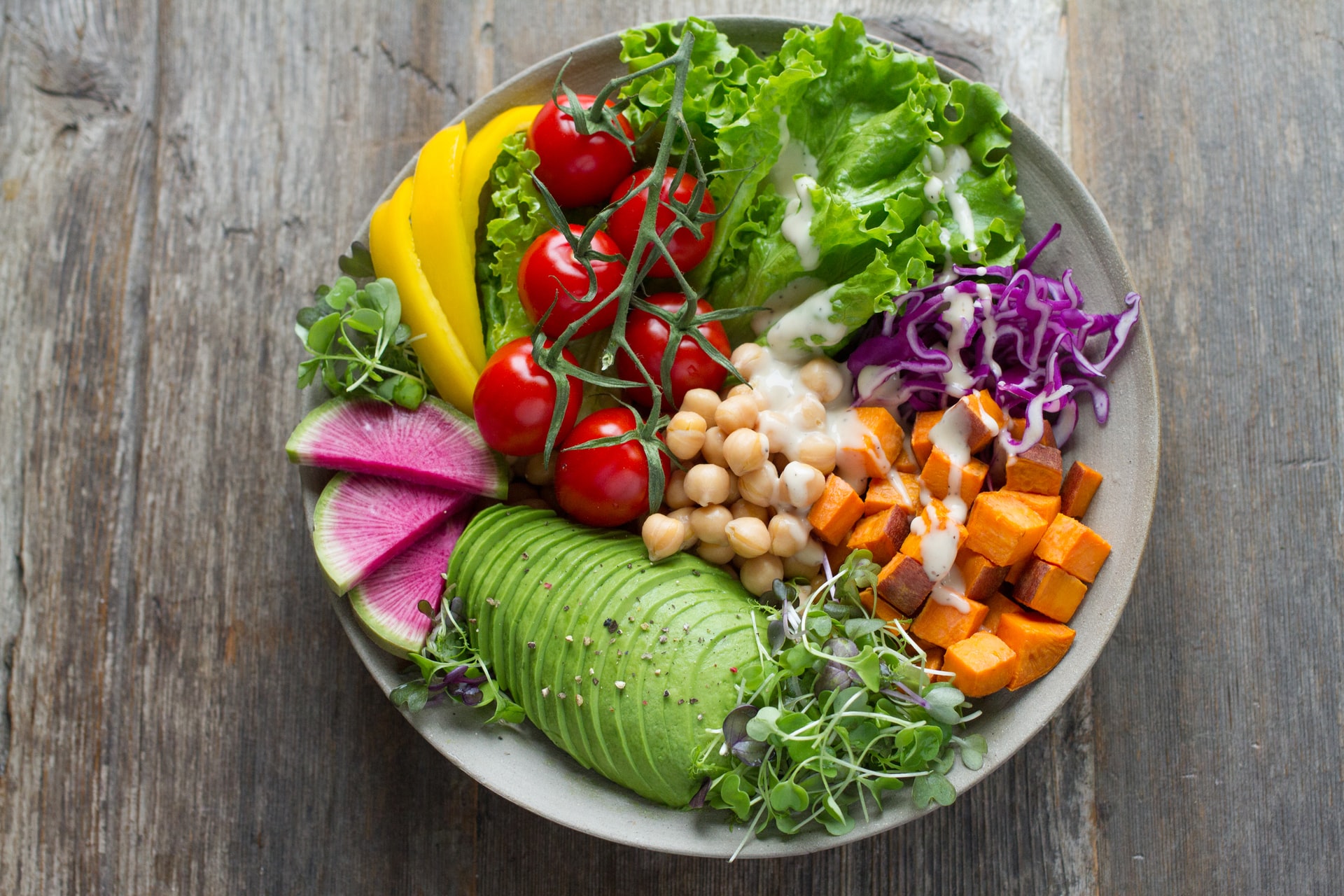
Eat more vegetables
We want to be eating a rainbow of colour every day; red, yellow, green, purple, and white. We want to eat an unlimited supply of greens, preferably at every meal but for the others we should be looking at 5 veg and 2 fruit per day minimum – I ask clients to try to reach 10 a day.
Cruciferous vegetables are important as are alliums, we should be eating lots of these. Ensure that you eat some raw cruciferous every day for the sulforaphane, a major antioxidant, due to sulforaphane being easily destroyed by heat. This is easy to do if you add a cruciferous rich salad of rocket, watercress, radish and spring onion! Or make a slaw with cabbage, radish, shallot, carrot and fennel, perfect with your BBQ bean burgers!
Healthy fats
Healthy fats are essential for our brain, hormones and our cell walls to function properly. If we consume too much of the bad fats, e.g., trans fats, or fats that have been oxidised like fried foods, this may create inflammation. Although we need omega 6 in our diets we get a huge amount of it from seeds, grains and even from our meat.
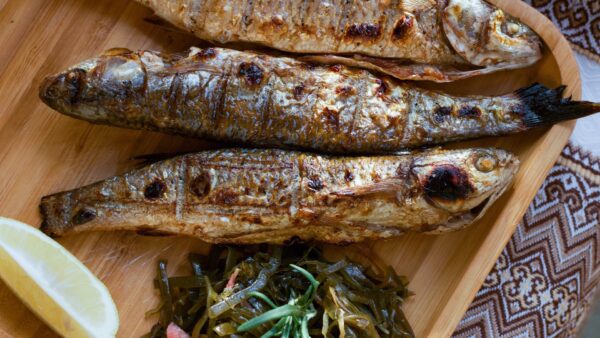
We need enough of the healthy fats helps to balance this out. Do this by increasing omega 3 fatty acids:
- Oily fish (think SMASH sardines, mackerel, anchovies, salmon, herring)
- Chia seeds, hemp seeds, flax seeds and walnuts
And ensuring there is lots of the other healthy fats like:
- Olive oil rich in polyphenols – ensure it is always cold pressed!
- Coconut
- Avocado
- Even Butter so long as it is good quality, organic or grass fed and in small amounts. Margarine is not healthy; it is grey when made and they dye it yellow so that it looks edible. Would you eat a grey fat? Think about that next time you are spreading it on your toast.
Herbs and spices
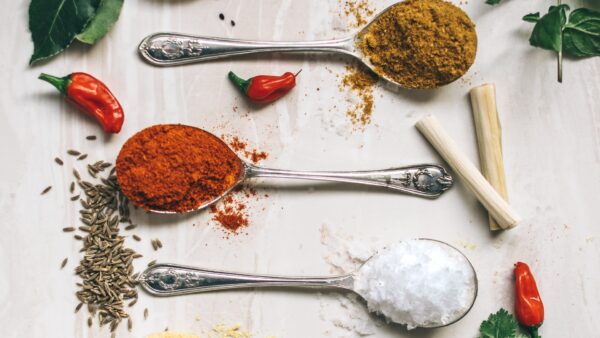
Herbs and spices are full of volatile oils and polyphenols that work on our anti-inflammatory pathway, we do not use enough of them in our western diets anymore! Fresh herbs are easy to grow even on a windowsill, window box or tiny garden/patio.
- Rosemary, basil, thyme, coriander etc. all contains volatile oils that benefit our health.
Other dried herbs and spices are easy to incorporate into our cooking.
- Turmeric in particular works as an anti-inflammatory, an antioxidant and as an antibacterial!
- Cinnamon helps uptake of blood glucose to cells and sweetens food
- Cumin and other spices can calm the digestive tract, lower inflammation and more.
Cooking Technique

Lastly, I would like to point out that HOW you cook your food is almost more important than if your food is organic, grass fed etc. It is incredibly easy to spoil the beautiful nutrients that you are hoping to consume by cooking them in the wrong way.
“The beneficial effects of the Mediterranean diet may be due not only to the consumption of certain foods, but also cooking techniques such as sofrito, which can help the extraction of carotenoids and phenolic compounds from food matrix, and could contribute to its bioacessibility, bioavailability, and health effects.”
Learn how to cook food that works for your body and your DNA on our GENE-IUS cooking course.
A cooking course based in easy-to-digest science and cooking demos that translate the science to your plate plus a library of delicious recipes to explore.
The cooking course that brings out the GENE-IUS in your kitchen